How to Reach New Audiences With Creators


If you're leading creator marketing today, you've felt the pressure to keep your brand culturally relevant. It's the phrase that keeps surfacing in every planning conversation, and it sounds simple until you actually try to design for it. Staying relevant means thinking beyond your own lane, listening to audiences you don't already own, and showing up in moments your category hasn't claimed yet.
Creators are the fastest and most credible way to do that. Done right, they bring your brand into a new audience authentically, through voices that audience already trusts, instead of forcing your way in with paid reach alone.
This is exactly what Emily Dunn, Senior Director of Strategic Partnerships, PR, and Social at MacKenzie-Childs, and Dena Silver, Director of Influencer and PR at Hard Candy, discussed during our latest webinar event.
These two marketing leaders have broken their respective brands into entirely new audiences and lived through what works and what doesn't. Here are their best tips and tricks to help you do the same.
Top 5 tips for breaking into new audiences with creators
Tip #1: Start with your existing creator community
Before building something from scratch, look at the creators already in your orbit, the ones talking about your brand organically or who you've partnered with in the past, and pay close attention to what they're actually saying. Your next audience opportunity is often already showing up in their content, and you just have to spot it.
That's exactly how MacKenzie-Childs, a home decor brand, stumbled into sports. The signal came straight from its own organic social: when the team launched a new green colorway design, the creative team leaned into the trending content of "Tennis Core" and the launch posts took off. That viral moment, surfaced from listening to what was already resonating, became the entry point into an entirely new audience.
The lesson is to get grounded in what your existing community is saying before you chase someone new. Often you've been quietly building traction with your next audience all along, and surfacing those signals (which we'll show you how to do at the end of this post) is the fastest way in.
Tip #2: Cultural moments are the entry point
Both Dena and Emily broke into a new audience by showing up in a cultural moment.
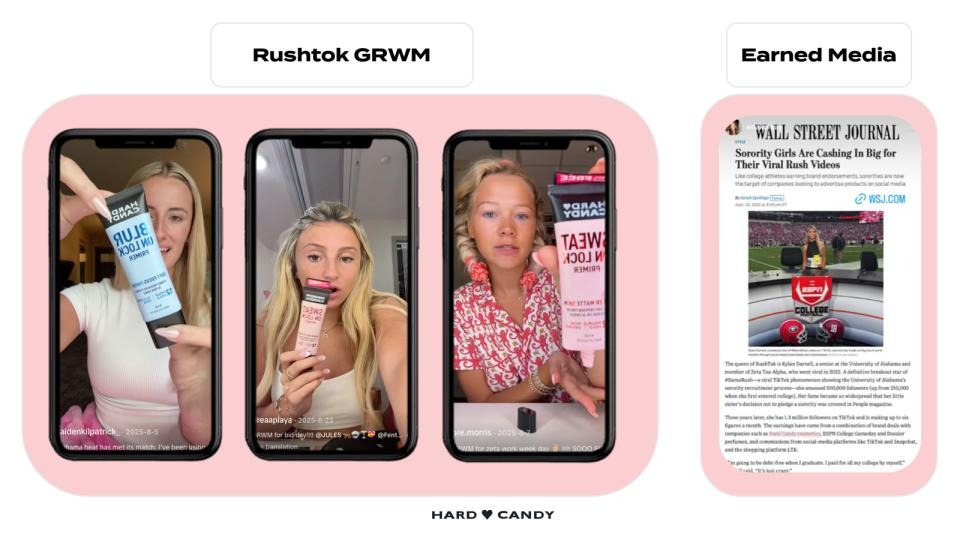
For Hard Candy, a beauty Walmart-exclusive brand, that meant reaching a younger consumer than their usual mid-to-late-twenties shopper. Last summer, the team bet on RushTok, the sorority recruitment process that becomes a full-blown social media event every August. But rather than flooding the moment with unboxing videos, they got strategic about how their product showed up in the content itself.
"We didn't want to just have a ton of unboxing videos. The product we focused on was our primer, which is perfect for this. Because primer is one of the first products you apply, we were capturing eyeballs through the core focus of the content, but also getting people at the very beginning before they got bored and scrolled away." — Dena Silver, Director of Influencer and PR, Hard Candy
That deliberate product placement, leading with Blur on Lock primer inside the get-ready-with-me content core to RushTok, is what made the campaign perform. And rather than a single touchpoint, Hard Candy carried the "how will your makeup hold up" message into game day glam, keeping a relevant presence on campus instead of moving on to the next thing.
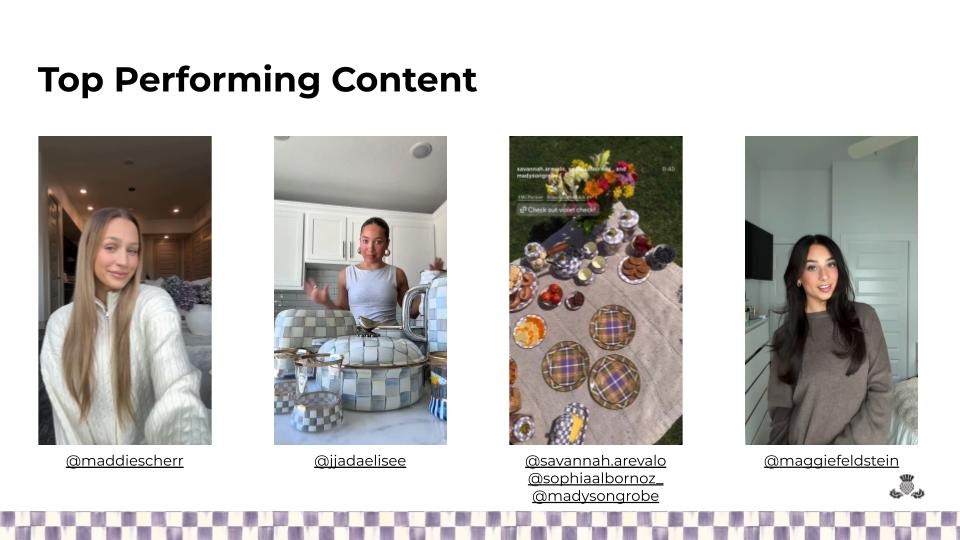
For MacKenzie-Childs, that viral Tennis Core spark opened the door to NIL and collegiate athlete partnerships, which became one of the clearest proof points of the entire framework. A few things made it work:
- The products lived inside authentic lifestyle content rather than feeling overly branded. Athletes naturally folded MacKenzie-Childs into their day-to-day lives through apartment decor, hosting, morning routines, and more. That made the content feel aspirational yet relatable to their fellow Gen Z followers.
- NIL creators helped modernize and expand brand perception among younger consumers. Through college athlete creators, MacKenzie-Childs was positioned not just as a home decor brand, but as a fun, easy way to bring personal style into your space.
- The brand partnered with athletes whose existing personal style already aligned with the MacKenzie-Childs aesthetic. By selecting athletes who already leaned into colorful, elevated, lifestyle-forward content, the partnerships felt authentic to the athletes and their audiences, resulting in more seamless storytelling and stronger audience resonance.
The payoff: Gen Z is now MacKenzie-Childs' fastest-growing audience cohort, and colleges have started inbounding to partner.
Tip #3: Define success before you have a baseline
Moving into a new audience means you often have no historical benchmark to measure against. Both leaders leaned on upper-funnel and qualitative signals to prove early momentum.
Dena tracked content volume, engagement rate, comment sentiment, and organic pickup beyond placements, and got geographically specific to connect awareness to sales.
"We were able to target colleges that were within driving distance of a Walmart, because we do want to see some sales uplift to tie with that awareness." — Dena Silver, Director of Influencer and PR, Hard Candy
Emily focused on awareness KPIs, net-new partners, and whether the new audience over-indexed against typical benchmarks. In her case, the collegiate athletes consistently outperformed usual benchmarks. The trust, affinity, and fandom in those communities drove the performance, and qualitative signals like colleges inbounding to partner backed it up. The bigger lesson was how she framed all of it for leadership: widen your aperture, pair your quantitative and qualitative data points, and be honest that you're still in test-and-learn mode.
"Bring the data to the table, and start with a grounded why. Show the ROI potential, the engagement, and how your brand fits the customer base you want to acquire." — Emily Dunn, Senior Director of Strategic Partnerships, PR, and Social, MacKenzie-Childs
She also recommends looping in the product team when affinity points to a bigger opportunity, because a new audience that over-indexes can be the start of a new product conversation.
Tip #4: Discovery is still part art, part science
Finding the right creators in a brand-new audience takes data and instinct in equal measure, and both leaders leaned heavily on Traackr to do it.
When Dena builds a campaign to reach a new audience, she starts in Traackr's benchmark. The churn filter helps her find creators who've stopped talking about competitors and could talk about Hard Candy instead. From there, she layers in discovery to surface creators in adjacent categories who aren't yet in her network.
"I personally love the churn filter on Traackr’s competitive benchmark to really help scoop up some of the creators that have stopped talking about our competitors and maybe can talk about us a little bit more." — Dena Silver, Director of Influencer and PR, Hard Candy
Emily's team works a similar motion, treating Traackr as the foundational dataset and constantly building lists of potential creators through discovery and vetting so they're ready the moment a campaign launches.
Hot Tip: Looping back to your campaign goal matters here too. If the objective is awareness, Emily and Dena mentioned not defaulting to seeding at scale with micros. When budget and team size are limited, one well-chosen macro with the right audience mix can outperform a large seeding roster. That said, there's no universal formula. What works for one brand won't necessarily be the right move for you, so test different creator tiers and see what performs best for your program and budget.
Tip #5: Test and learn before you sell internally
If leadership is skeptical about creators outside your brand's usual aesthetic, don't pitch the big investment first. Seed product to new creator types, watch how they actually use it, then bring that content back as proof of concept.
"There's no harm in seeding to some of these people and seeing what sort of return you get. Before you're even investing in a monetary way, getting product in their hands, seeing how they use it, and using that to present back is super helpful." — Dena Silver, Director of Influencer and PR, Hard Candy
Real-time visibility makes that test-and-learn loop tighter. You don't have to wait until a campaign wraps to know whether a new audience is responding, which means you can show leadership signals while there's still time to adjust.
"Traackr is phenomenal for the organization of campaigns and seeing those real-time results. Our team is constantly in the dashboard refreshing, seeing how we're tracking." — Emily Dunn, Senior Director of Strategic Partnerships, PR, and Social, MacKenzie-Childs
The Framework: A Step-by-Step Approach to Unlocking New Audiences
The tips above map to a repeatable framework you can run for any new-audience play, with Traackr powering each step.
1. Know your base before you grow. Filter your existing roster (paid partners and organic mentions alike) by audience demographics and creator tier, and get a platform-by-platform breakdown across Instagram, TikTok, and YouTube. The goal is to surface the creators already reaching where you want to go.
2. Uncover what resonates. You need to understand the content that lands with this new cohort. Pull every piece of a creator's content into a single view, spot the themes, formats, and hooks that consistently perform, and run content analysis reports to get the nuance behind each theme.
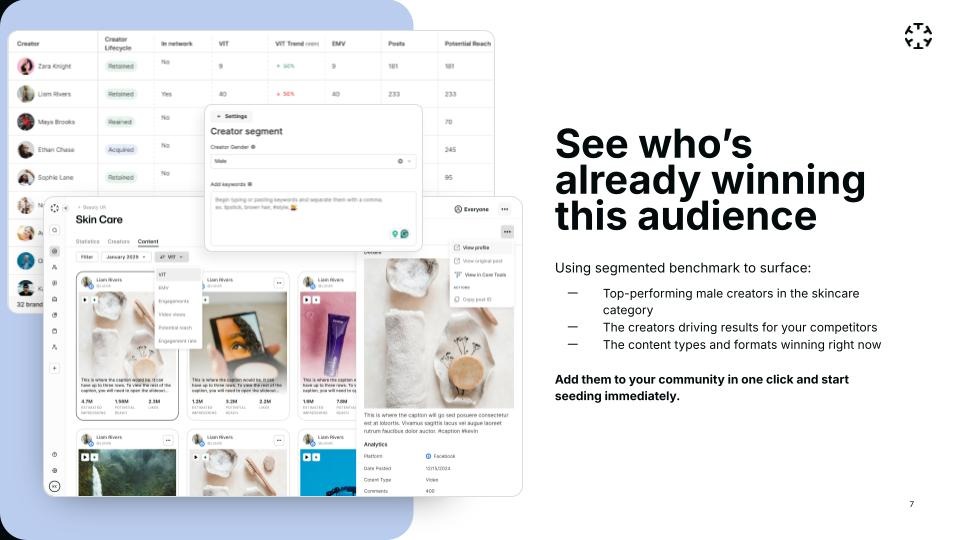
3. Identify key voices of influence. Now look beyond your roster. Use Traackr’s segmented benchmarking to surface top-performing creators in your category, the creators driving results for competitors (the churn filter is a shortcut here), and the content types winning right now, then add them to your community in one click and start seeding. From there, use discovery and vetting to pinpoint rising creators by interests, content keywords, and audience demographics, so you find the next wave before your competitors do.
Reaching a new audience isn't about starting over. It's about knowing your base, understanding what already resonates, and finding the right voices, then having the data to move quickly and prove it's working. That's what Traackr is built for: revealing the growth levers hiding in your creator data and helping you action them at scale.
Listen to the full conversation with Emily and Dena here.
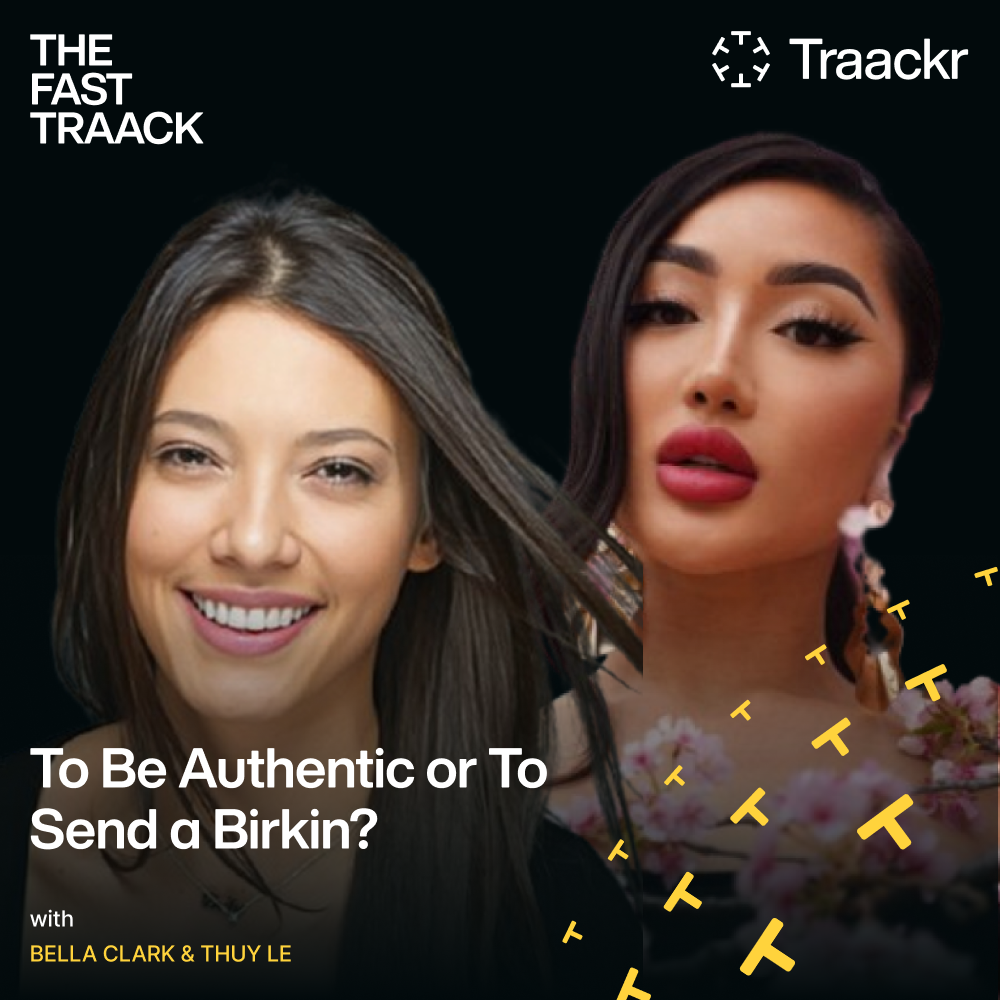
Listen to Bella Clark, Head of Influencer and Partnerships at Lipton, and content creator, Thuy Le, share why authenticity outshines extravagance when it comes to creator partnerships.
Listen nowSee which brands are leading the way in influencer marketing with our real-time performance leaderboard.
View brand leaderboard
How Laboratoires Pierre Fabre Built One Global Creator Marketing Program Across 20+ Markets

.jpg)

Level up your creator marketing expertise
Get industry insights and updates straight to your inbox.