What is influencer tech, and why is your data the advantage?


The old picture of influence as a cottage industry, where a few relationships were managed by feel and a spreadsheet, is gone. For the most ambitious consumer brands, influence has been industrialized, reaching the kind of scale that used to belong to paid media, and the only reason it can operate there is the layer of software sitting underneath it.
The platforms sitting underneath modern influence programs aren’t just workflow tools — they’re data infrastructure. And the brands that understand that distinction early are building something their competitors won’t easily replicate.
I recently talked through this shift with Vincent Balusseau for La Réclame, and one question kept coming back: if influence has become this big, how do you actually run it?
That question is what “influencer tech” answers. But the more I work with global brands, the more convinced I am that the tools themselves aren’t the prize. The data they help you build is.
What influencer tech actually does
When I say influencer tech, I mean the infrastructure that lets a brand run influence like a real program instead of a string of one-off campaigns: finding and qualifying creators, managing campaigns, tracking relationships, and measuring performance in one place.
The expectations are the same ones you’d have for any part of your martech stack. You want efficiency and effectiveness. The tools automate the parts that quietly eat a team’s week, like sourcing profiles, vetting them, and pulling reporting together.
But the bigger payoff isn’t just doing the same work faster. On the same budget, choosing better creators, steering campaigns more sharply, and measuring results more honestly gets you more impact. That matters enormously now that influence budgets have grown large enough to draw real scrutiny.
Why your data is the thing worth protecting
For most brands, creator data is scattered. Some live with agencies, some sits inside various platforms, some is buried in old decks and personal contacts.
When it’s fragmented like that, you can’t learn from it, and you can’t answer the questions that should be easy:
- Which creators are building real equity with your audience?
- Which formats actually drive results?
- What are your competitors doing?
Pull that data into one place and influence stops being a series of gut calls. It becomes a practice where decisions are backed by evidence. You start to see which partnerships are worth deepening and which activations to stop repeating.
It also gives you something to stand on internally. Leadership doesn't ask whether a campaign was clever; they ask what it did for the brand. When your data lives in one place, you can answer that, tying influence to real business outcomes all the way to clicks, conversions, and revenue, and showing exactly which creators are performing and where the next dollar should go.
And there’s a second reason owning your data matters, one that’s coming fast. The AI systems that will soon handle a lot of operational work in this space are only as good as the data they learn from. Brands that have spent the time organizing clean, structured creator data will have a genuine head start, because their AI will be learning from real signal instead of noise. Even if you don’t know exactly what you’ll do with the data today, you’re building the asset your AI strategy depends on tomorrow. That asset belongs on your books, not your agency’s.
Automation doesn’t kill the relationship
The worry I hear most often is that all this structure makes creator relationships cold and transactional. I think the opposite is true.
Automation isn’t there to replace the human relationship. It’s there to give it room again. When the platform holds the history, the briefs, the contracts, and the usage rights, you’re freed from the administrative drag and can put your attention where it counts: the relationship itself. That only gets more important when you’re working with tens of thousands of creators.
I keep coming back to a phrase I love: scaled intimacy. Everything that can be automated probably will be. The efficiency gains will keep coming, but that’s exactly what will make genuine human relationships the differentiator. The brands that win won’t be the ones that automate the most. They’ll be the ones that automate the right things so their people can focus on judgment and trust.
That’s also how I’d judge AI in this category. The goal isn’t AI for its own sake. Every tool encodes a point of view about what influence is for, and AI should answer a real need, not decorate a roadmap. Used well, it’s an accelerator that hands time back to the team for the decisions that actually require a human.
How to think about the influencer tech landscape
The flip side of all this growth is a crowded, noisy market of tools that don’t always do what their categories suggest. If you’re evaluating where to invest, it helps to compare offerings on the same terms. The Apples to Apples report is a useful map for exactly that, laying out who does what across the creator economy so you can match a tool to your actual workflow rather than its marketing.
But whichever platform you land on, what you’re really deciding is where your data lives — and who owns it.
The data you’re building today
The efficiency gains from automation will keep coming. Operational tasks that take teams days today will take minutes soon — and most of that will be AI-driven. But those systems are only as good as the data they train on. Brands that have spent years building clean, structured creator data will have a genuine head start: their models will learn from real signal, not noise.
That asset belongs on your books, not your agency’s. Even if you’re not sure what you’ll do with it today, you’re building what your AI strategy depends on tomorrow.
And everything that gets automated is also what frees your team for what can’t be — the judgment, trust, and human relationships that make a creator want to advocate for your brand rather than just post for it.
Hold onto the through-line: no matter your industry, the software is how you operate at scale, and your data is what compounds
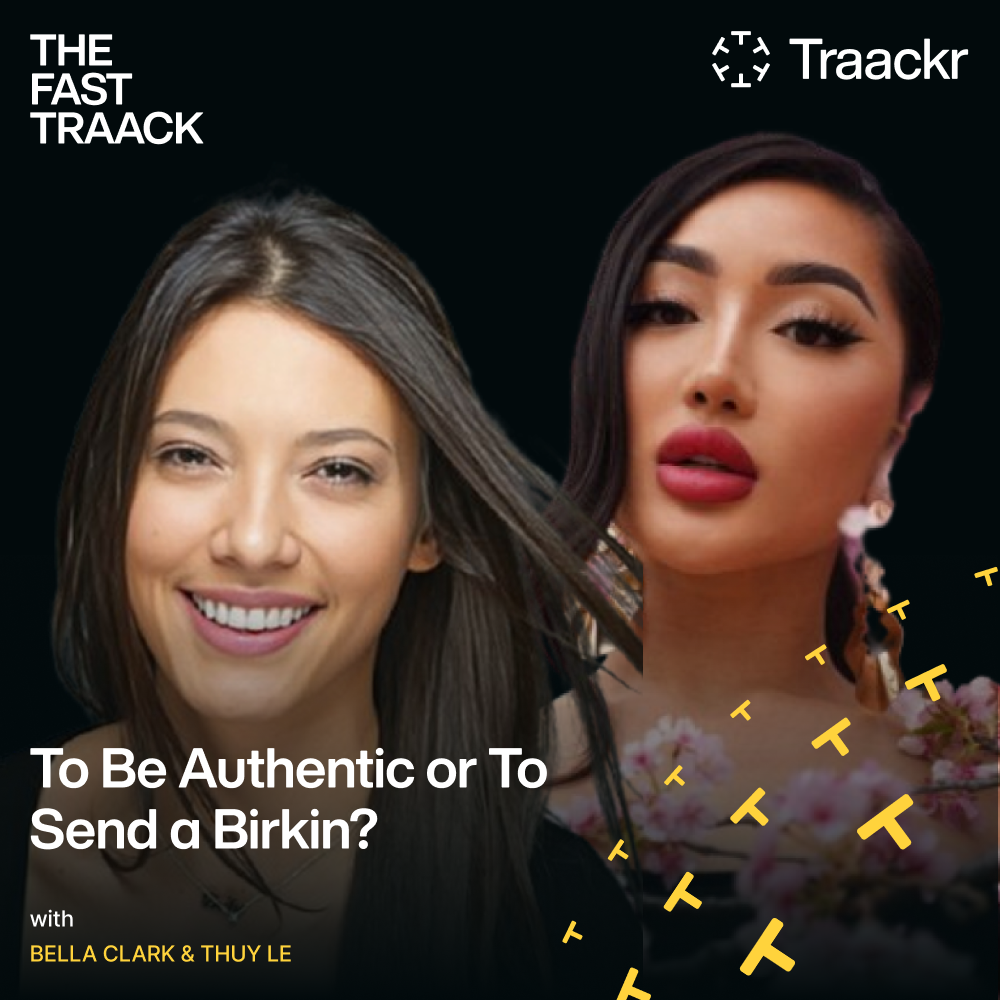
Listen to Bella Clark, Head of Influencer and Partnerships at Lipton, and content creator, Thuy Le, share why authenticity outshines extravagance when it comes to creator partnerships.
Listen nowSee which brands are leading the way in influencer marketing with our real-time performance leaderboard.
View brand leaderboard
How Laboratoires Pierre Fabre Built One Global Creator Marketing Program Across 20+ Markets

.jpg)

Level up your creator marketing expertise
Get industry insights and updates straight to your inbox.