Why 42% of Advertisers Say Influencer Marketing Is Too Complex

.jpg)
New ARPP data shows the market is booming. But underneath the growth, operational complexity is the biggest threat to the next wave of investment, and the biggest opportunity for brands that solve it first.
The French market just handed global marketers one of the clearest signals we’ve seen on where creator marketing is headed.
According to the second edition of the ARPP x France Pub study on influencer marketing investment, net spending in France climbed from €323M in 2022 to €587M in 2025. Nearly doubled in three years. Influencer marketing now represents 1.7% of total communications spend (up from 1.0%) and 5.2% of digital investment (up from 3.6%). The category outpaced the broader ad market every year, growing 13.1% in 2025 while total media spend actually declined by 1.3%.
Tucked inside the good news, though, is a number every marketing leader should sit with for a minute:
42% of national advertisers answered “maybe” when asked if they’ll keep investing in influencer marketing. The reason they gave wasn’t performance. It was operational complexity.
Not cost. Not brand safety. Not measurement doubts. What has them hesitating is the day-to-day work of actually running a program at scale.
The real bottleneck is execution
Creator marketing used to be a bet. Now it’s a line item, and a growing one. The ARPP data confirms it: 16% of national advertisers now spend more than €50,000 on influencer marketing, compared to just 2% in 2022. More brands are moving from tests to sustained programs.
As spend scales, so does the operational surface area. You're not managing five creators, you're managing five hundred. All across dozens of markets, categories and objectives. And the data is coming from every direction — platforms, agencies, affiliate networks, internal dashboards.
No wonder 42% aren’t sure they can keep this up.
Here’s the pattern underneath that number: brands have more creator data than ever, and less clarity on what to do with it. Dashboards multiply. Reports pile up. But the question that actually matters, “what should we do tomorrow to win?”, stays unanswered.
Decoupling complexity from growth
Brands pulling ahead aren’t throwing more people or more agencies at the problem. They’re replacing ten conflicting dashboards with a single decision-making system, one that doesn’t just report on what happened but reveals what to do next and helps them act on it.
That’s what Traackr was built to do. We call it the decision engine for creator marketing:
- Reveal: a universal truth layer that pulls every creator mentioning your brand across every platform, normalized into one dataset and analyzed against 15 years of proprietary intelligence. No cherry-picked views or agency-flattering screenshots. Just what’s working, what’s not, and where to invest next.
- Act: an execution layer that turns those decisions into motion. Automated creator outreach, centralized gifting, contract compliance, brief generation, and standardized KPIs across global teams, all in one platform.
What it looks like in practice
Say you're a global beauty brand planning your fall push across the US, UK, and France.
You open Traackr’s benchmark and pull up your brand's share of voice against your top three competitors across TikTok, Instagram, and YouTube, sliced by market. In France, one competitor is outperforming you on TikTok at a 2:1 ratio. You drill into their creator lineup and find that 40% of their lift is coming from mid-tier creators you haven't activated yet. Traackr surfaces the ones whose audiences overlap with your target demo and are brand-safe.
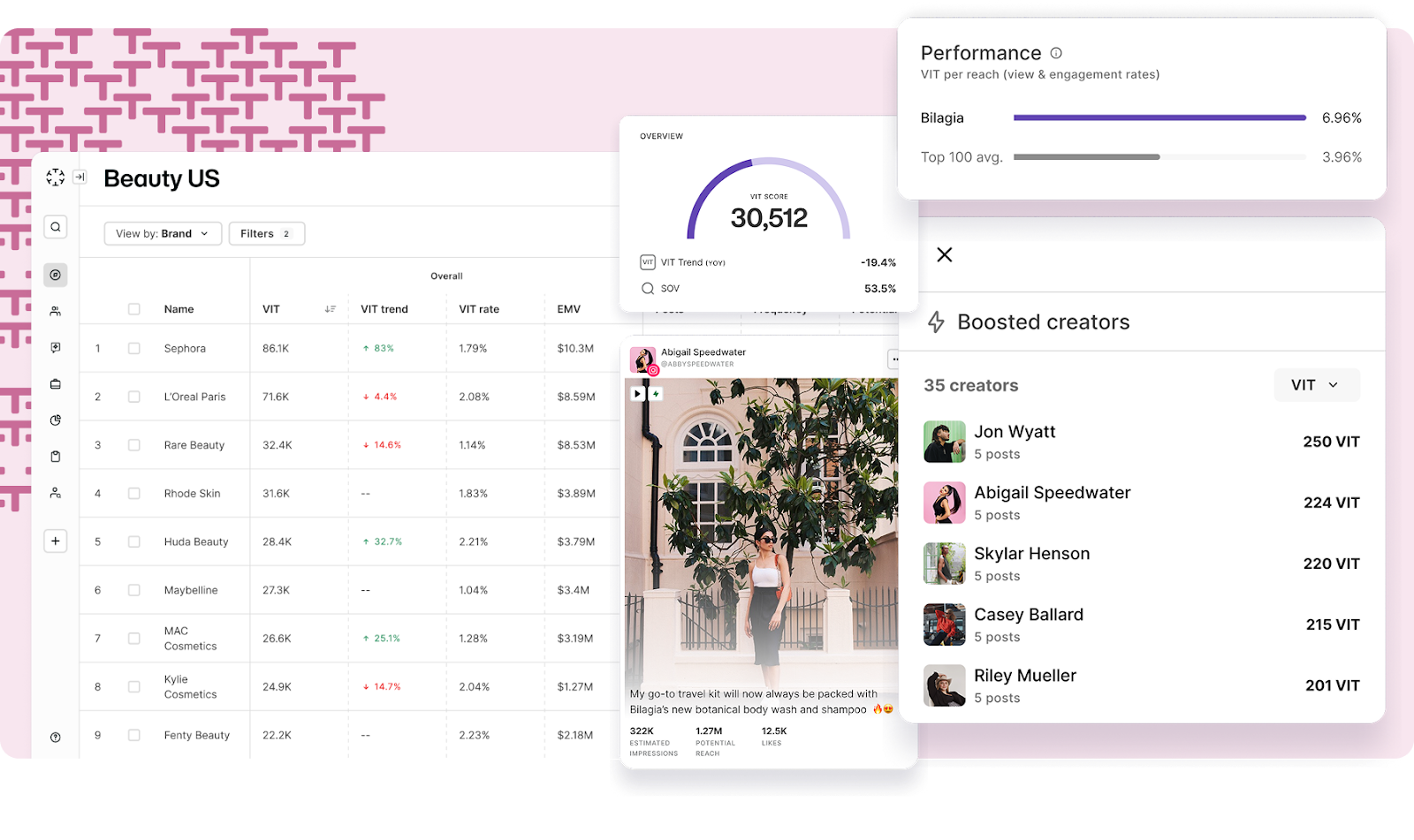
From there, you push those creators into a campaign workflow, trigger gifting through the integrated module, and send a standardized brief. Compliance checks run automatically.
Four weeks later, you're not waiting on an agency deck. Your analytics view is live, showing earned content, CPE, CPP, and attributed conversions in one language across all three markets.
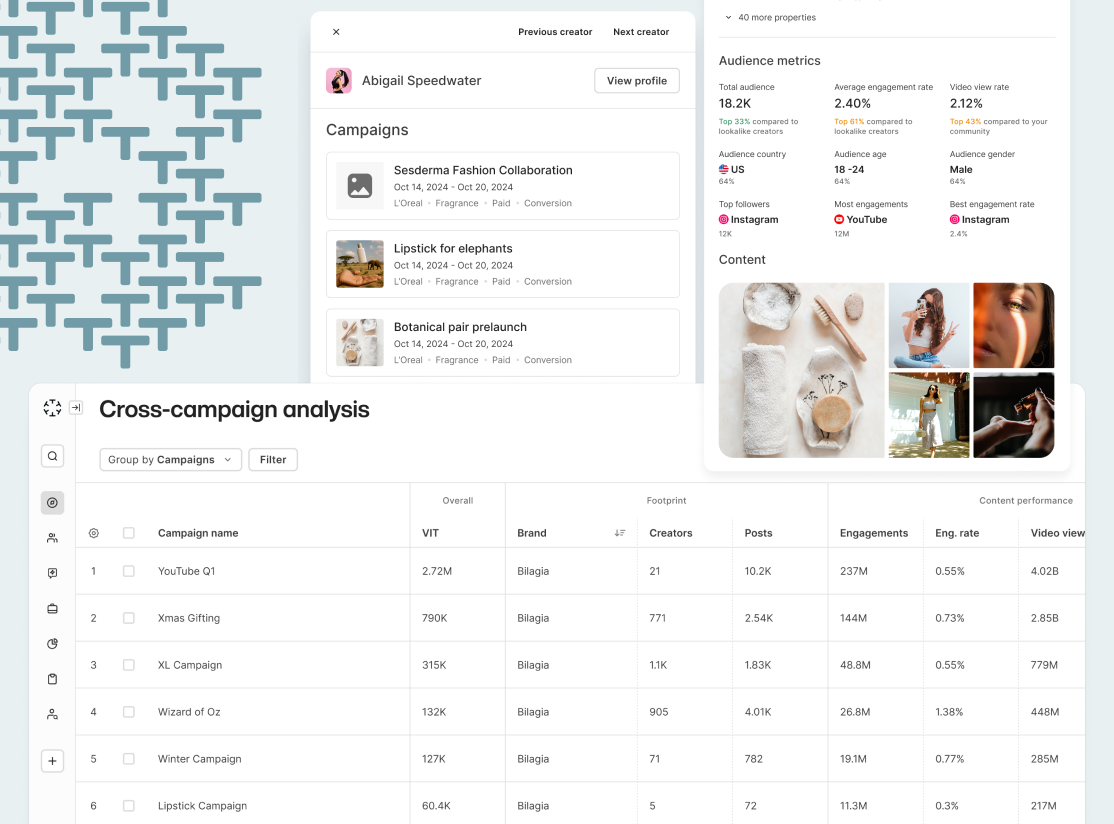
That's the loop. Reveal what to do, act on it fast, and measure the signal. So you can finally answer the questions your leadership keeps asking:
- How do we 10x our impact without 10x'ing our budget?
- Where are we winning vs. competitors, and where are we losing?
- Which creators actually drive business outcomes, not just views?
- Who are the rising creators we should be building relationships with now?
- Where should we be focusing next?
The next wave goes to the brands that solve for the 42%
The next wave of growth will go to the brands that stop analyzing and start doing.
If your team is drowning in dashboards or hesitating before your next creator investment because the path forward isn't clear, you're in the 42%. The fix isn't more complexity. It's one decision engine that shows you where to focus, and helps you act on it.
More data, more doing, less confusion. Finally.
Ready to see what’s hiding in your creator data? Request a demo and we’ll show you exactly what’s working, what’s not, and what to do next, using your real program and your real data.
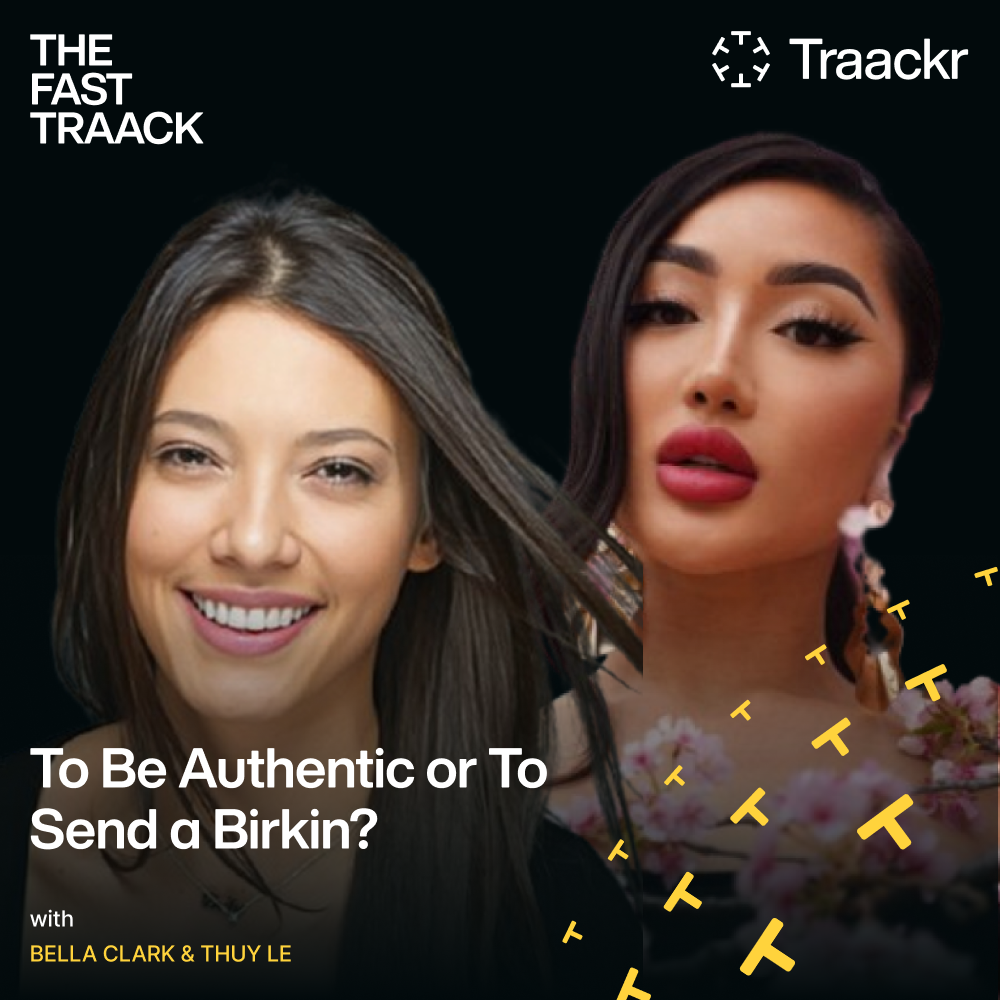
Listen to Bella Clark, Head of Influencer and Partnerships at Lipton, and content creator, Thuy Le, share why authenticity outshines extravagance when it comes to creator partnerships.
Listen nowSee which brands are leading the way in influencer marketing with our real-time performance leaderboard.
View brand leaderboard
How to Find Top Influencers in Less Time with Agentic Creator Discovery
.jpg)
Traackr Launches Abigail, the AI-Native Creator Marketing Strategist Built for the Global Enterprise

How Laboratoires Pierre Fabre Built One Global Creator Marketing Program Across 20+ Markets

Level up your creator marketing expertise
Get industry insights and updates straight to your inbox.