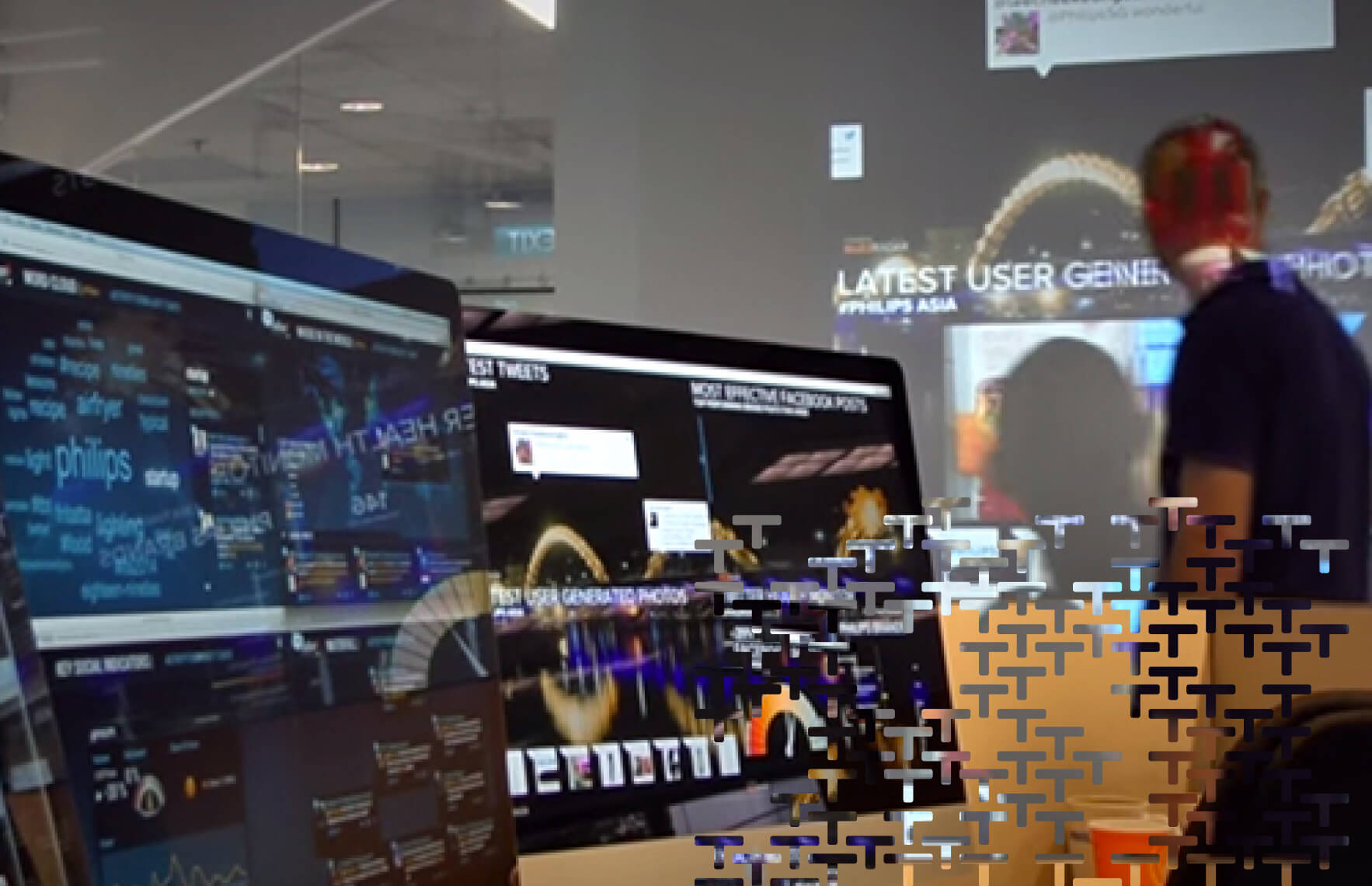
Royal Philips is a global Fortune 500 corporation, headquartered in the Netherlands. Although most often known as a consumer electronics company and the creator of the video recorder, CD format and LCD panel, today RoyalPhilips is a company with three main businesses – ConsumerLifestyle, Healthcare, and Lighting.
Challenge
Philips’ two core businesses, Healthcare and Lighting, have very similar B2B marketing challenges and opportunities. The use of traditional media channels – such as television, print media or tradeshows – no longer worked effectively to reach the economic buyers in these industries. Furthermore, the company’s niche product history vs modern broadened industry messaging confused potential buyers.
Strategies focused on social channels were believed to prove far more effective in delivering qualified, and more importantly, educated potential buyers to the sales teams as compared to traditional marketing activities.
It was into this situation that Damien Cummings arrived as CMOof the ASEAN Group of Philips. He had joined the business after stints with Samsung and Dell in Singapore. In his prior experience, he had been instrumental in steering the businesses towards using more socially-oriented marketing tactics. Damien brought a similar model to the forefront of marketing at PhilipsASEAN, which required a pivot of how the marketing function operated and communicated the company’s messages.
Solution
One of the philosophical underpinnings of Philips’ new digital strategy was the belief that there are core influencers who are critical to the business. Philips identified three key groups of influencers with whom to engage, based on their titles and positions. These groups were identified as Media, Influencers,Advocates — MIA.
At the core of this strategy was the concept of developing a digital command center. The Philips Asia Digital Command Centre(PADCC) is a facility dedicated to monitoring and participating in social dialog about the company, its product, and the categories its products are relevant to. The PADCC is strategically staffed by members of agency partners including OBVIAM, Fleishman Hillard, Ogilv and Mather, Carat, and Havas.
A 3-tiered content strategy was developed, which focused on producing different types of content:
- Tier 1 – long-form documentary-like videos that focused in depth on issues associated with these business areas
- Tier2 – short-form content–short videos, slide presentations
- Tier3–snippets–from very short types of content as responses or to engender responses/debate, to ongoing audience-targeted posts, most exemplified by Tweets,Facebook posts and blog articles.
The technology stack allowing the PADCC to perform social monitoring, content creation, engagement and analysis includes Salesforce Marketing Cloud and Traackr. An in-house video production group created long-form video content as well as short video clips.
Philips worked with OBVIAM, a full-service social media marketing agency, who established a set of keywords that pinpointed the influencer conversation online. These keywords were implemented in Traackr’s search capabilities to discover influencers in over 15+ topic areas across Consumer Lifestyle,Healthcare, and Lighting industries. In Traackr, the influencers were ranked within “MIA” groups which allowed the Philips team to take priority on who to monitor, opportunities to engage and which content to share.
The Traackr platform provided daily email summaries that highlighted insights on how to best engage with the influencer groups. Philips used these daily highlight emails to supply information to key executives within the company on social activity of their influencers for each topic area in ConsumerLifestyle, Healthcare, and Lighting industries.
Results
The PADCC desired goal number of influencers was 1,000, however the project generated a combined database of close to 3,000 influencers. Of these, the Philips team was able to categorize those influencers into various levels of engagement, which added value and strategic support to ongoing PR initiatives.
Results from social monitoring reports show:
- Increased overall conversation relating to Philips
- Higher number of mentions and activity relating to Philips products and expertise
- Increased mentions among the high-value target audience of medical experts
Upon reviewing the results and strategically narrowing their influencers, an influencer outreach program is currently targeting around 45 high-value influencers deemed vital to Philips’ marketing plan.
We could not have achieved the outcomes we did in identifying the target audience without the power of Traackr. The software was flexible enough to meet the client’s needs, while delivering results that far exceeded our expectations. The result is a world-class key influencer campaign driven by a world-class software. —Jay Pring, OBVIAM
With the PADCC in full execution mode, the transition towards a digital model of marketing is now in full swing at Philips ASEAN. By 2016, Philips plans to move all marketing strategy in southeast Asia to a purely digital model and subsequently transition the rest of the global organization towards this model.
Keys to Success
Strategic staffing – The staffing of the PADCC is currently supported by external agency partners, which allows for easier collaboration. Philips pulled together team members from agency partners including OBVIAM, Fleishman Hillard, Ogilvy and Mather, Carat, and Havas. Team members were asked to work for no more than one to three days a week in the PADCC, and then rotated. With a large qualified team in rotation, this kept the group fresh and focused, and driven towards success.
The right marketing stack – Marketing leaders transitioning to a digitally-focused model, are faced with tough decisions on where to invest. More often than not, there are multiple marketing technology tools necessary within an organization, making these decisions even more confusing. Philips chose to keep their marketing technology lean and efficient including only two key tools: Traackr, Salesforce Marketing Cloud.
Know your goals – Philips set lofty goals for their influencer program, including developing a database of 1,000 engaged influencers. Beating that goal three-fold, the project generated
a database of close to 3,000 influencers. The Philips team categorized those influencers into three groups (MIA) and various levels of engagement, resulting in stronger brand awareness among the target audience, higher engagement among influencers, and increased support of existing PR programs.
Listen to Bella Clark, Head of Influencer and Partnerships at Lipton, and content creator, Thuy Le, share why authenticity outshines extravagance when it comes to creator partnerships.
Listen nowSee which brands are leading the way in influencer marketing with our real-time performance leaderboard.
View brand leaderboard

How Danone Unified Influencer Marketing Across 18 Markets
18 markets unified
%20(1).png)
How MCoBeauty Became the UK's Fastest Rising Beauty Brand
+3,807% attention growth

Pierre Fabre Laboratories USA Influencer Marketing Case Study
+189% YoY reach

.jpg)
L’Oréal Spain: TikTok Influencer Marketing Case Study
100% data match with TikTok Ads Manager
Level up your creator marketing expertise
Get industry insights and updates straight to your inbox.